
May 24, 2026
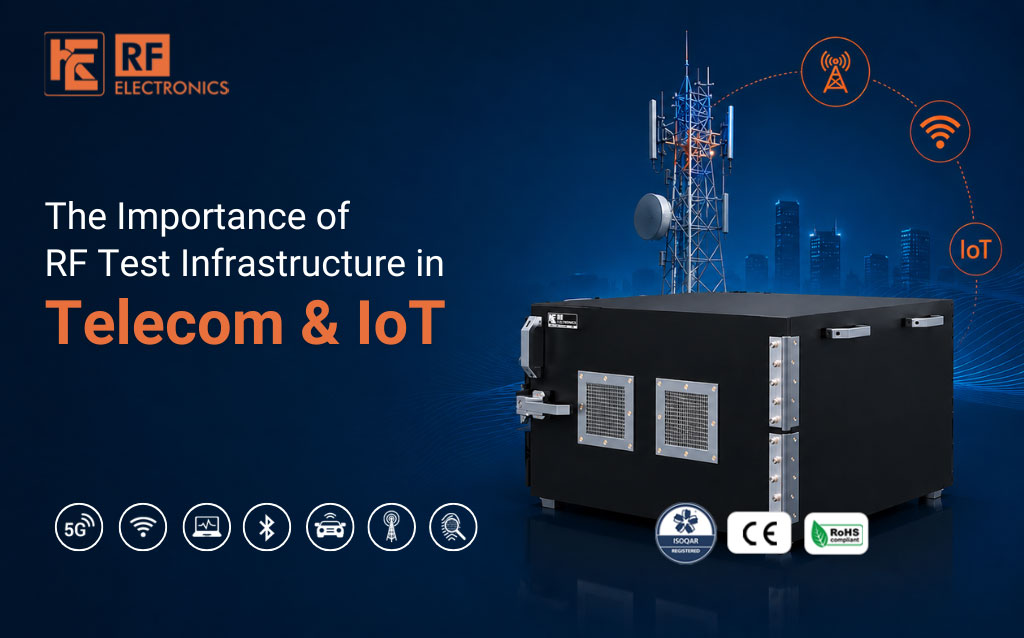
As wireless technologies continue to evolve, the demand for reliable, high-performance telecom and IoT devices has grown significantly. From 5G networks and smart cities to industrial IoT and connected consumer devices, ensuring seamless wireless communication is critical. However, achieving this level of performance requires more than just good design; it depends heavily on robust and well-integrated RF test infrastructure.
Modern testing environments must support high-frequency signals, complex communication protocols, and large-scale device validation. This is where advanced RF testing solutions, including RF test racks, RF Shield Boxes, and automated test systems, play a vital role in ensuring accuracy, scalability, and regulatory compliance.
RF test infrastructure refers to the complete setup of equipment, systems, and environments used to test and validate wireless devices. It includes all the essential components required to measure signal performance, ensure compliance, and maintain consistency across testing processes.
A typical RF testing infrastructure includes:
Together, these elements form a comprehensive wireless testing solution that supports both R&D and production-level testing.
Telecom and IoT devices now operate across multiple frequency bands and communication standards, including Wi-Fi, Bluetooth, 4G, 5G, and LPWAN technologies. This complexity requires advanced RF testing solutions capable of handling diverse testing scenarios.
Without proper RF test infrastructure, it becomes difficult to validate performance across all required parameters.
Maintaining signal integrity is essential for reliable communication. External interference, signal leakage, and environmental noise can significantly affect test results.
Using a combination of RF Shield Boxes and controlled testing setups allows engineers to:
Wireless devices must comply with strict regulatory standards before entering the market. Proper RF testing infrastructure enables:
For telecom and IoT manufacturers, compliance is not optional; it is a critical requirement for global market access.
With the rise of mass production in IoT and telecom devices, testing infrastructure must be scalable. Integrated RF test racks and automated systems enable high-throughput testing without compromising accuracy.
Benefits include:
An RF Shield Box is a core component of any RF testing infrastructure. It provides a controlled, interference-free environment for wireless device testing.
Key advantages include:
A well-designed RF Shield Test Box is essential for both R&D and production environments.
RF test racks help organise and integrate multiple testing instruments into a single, efficient system. They are widely used in telecom labs and production facilities.
Benefits include:
Automation is a key part of modern RF testing solutions. Automated systems reduce human dependency and improve testing speed and accuracy.
Features include:
Automation is especially important for large-scale IoT device testing and telecom production environments.
Reliable RF components such as connectors, cables, and adapters are essential for maintaining signal integrity within the testing setup.
High-quality components ensure:
Telecom equipment such as base stations, routers, and communication modules require precise testing to ensure network reliability. A robust RF test infrastructure enables accurate validation of signal strength and communication performance.
IoT devices operate in diverse environments and must maintain consistent connectivity. Using RF Shield Boxes and automated systems ensures reliable testing of sensors, smart devices, and connected systems.
Applications such as smart grids, automation systems, and connected infrastructure require scalable and reliable testing environments. Advanced RF testing infrastructure supports large-scale validation of these technologies.
Devices like smartphones, wearables, and smart home products rely on efficient wireless performance. Integrated wireless testing solutions help maintain quality and consistency during development and production.
A well-designed and integrated RF test infrastructure offers multiple advantages:
By combining shielding, automation, and structured testing setups, organisations can significantly improve their testing capabilities.
RF Electronics provides advanced RF testing solutions tailored to the needs of telecom, IoT, and high-frequency applications. With expertise in RF and microwave engineering, the company offers reliable infrastructure components designed for precision and performance.
Key strengths include:
RF Electronics focuses on delivering complete RF test infrastructure that supports both innovation and large-scale production.
As telecom and IoT technologies continue to advance, the importance of robust and scalable RF test infrastructure cannot be overstated. From ensuring signal integrity and regulatory compliance to enabling high-volume production testing, the right infrastructure plays a critical role in the success of wireless devices.
By investing in advanced RF testing solutions, including RF Shield Boxes, test racks, and automation systems, organisations can enhance efficiency, improve product quality, and stay competitive in the rapidly evolving wireless landscape.
Explore RF Electronics’ range of advanced RF Shield Boxes and integrated RF testing solutions, or connect with our experts to build a customised testing setup for your telecom and IoT applications.
Previous Blog
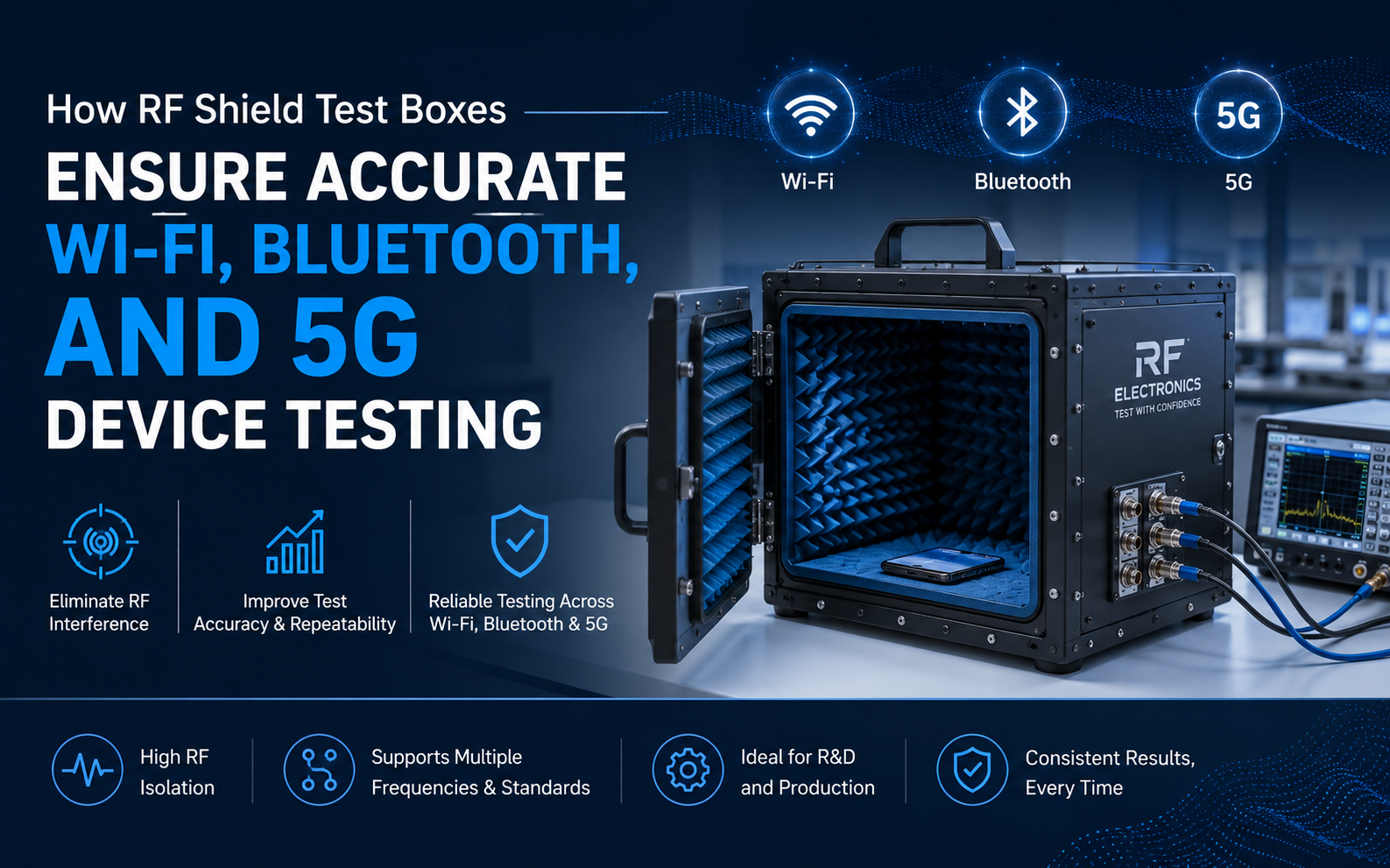
How RF Shield Test Boxes Ensure Accurate Wi-Fi, Bluetooth, and 5G Device Testing
Learn MoreNext Blog
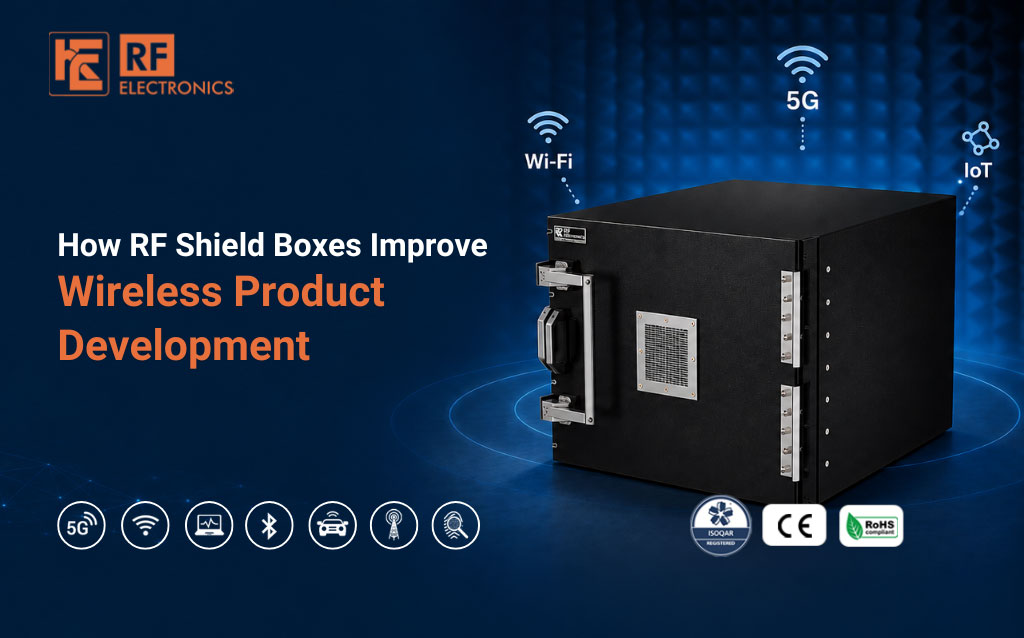
How RF Shield Boxes Improve Wireless Product Development
Learn More

 Free Consultation


